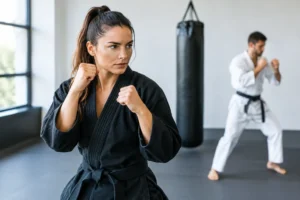
A jab that returns cleanly to your guard. A stance that remains stable even after several rounds. And a training partner who challenges you without putting you in unnecessary danger. People looking for adult boxing in Berlin usually want more than just a sweaty workout. It’s about proper technique, physical endurance, self-confidence, and an environment where consistent learning matters.
Boxing is direct, honest, and demanding. You’ll quickly notice where your stamina is faltering, whether your guard is open, and how well you can stay calm under pressure. That’s exactly where its strength lies: With regular training, you’ll develop skills that go beyond the ring. You’ll move with more control, set boundaries more clearly, and learn to take responsibility for yourself and your training partners.
Boxing for Adults in Berlin: More Than Just Cardio Training
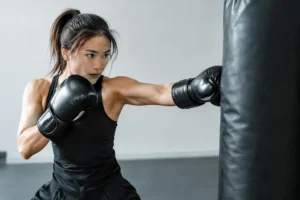
Good boxing training doesn’t start with hitting the punching bag as hard as possible. It starts with posture, sense of distance, and movement. Your stance gives you stability, your footwork puts you in a favorable position, and proper guard protects you both when attacking and defending. Only once these fundamentals are in place will combinations become truly effective.
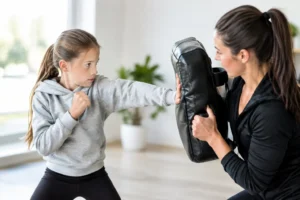
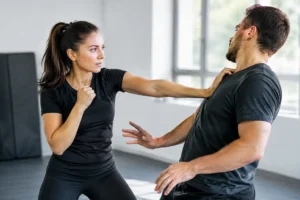
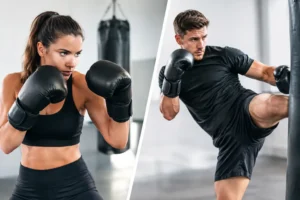
That’s why training combines technical drills, pad work, partner drills, shadow boxing, and conditioning sessions. The heavy bag helps you develop punching power and rhythm. Pad work teaches you reaction time, precision, and combinations. In controlled partner drills, a single movement then becomes real combat practice: You’ll recognize lines of attack, react to changes in distance, and remain capable of taking action.
This structure is especially valuable for adults. Many come to training after a long day at work and want to clear their heads. Others have athletic goals, want to lose weight, or are looking for a challenge that goes beyond the typical gym routine. Boxing can deliver all of that if the intensity is built up sensibly and technique isn’t sacrificed for the sake of speed alone.
Getting Started as a Beginner: Technique Before Intensity
You don’t need any martial arts experience or exceptional fitness to start boxing. What matters most is a willingness to train regularly and accept feedback. The first few weeks focus on seemingly simple things: the basic stance, footwork, jabs, hooks, defense, and breathing. If you take these elements seriously, you’ll lay the foundation for quick, steady progress.
A common mistake is to throw punches using only the shoulder and arm. Good punching power, on the other hand, comes from the whole body. The legs, hips, core, and shoulders work together while the other hand maintains your guard. This may feel unusual at first. With clear instruction, however, it becomes a natural, efficient movement that conserves energy and protects your joints.
Stamina also develops gradually. Boxing demands endurance, explosive power, coordination, and concentration all at the same time. You don’t have to last ten rounds on your first day. The important thing is to train consistently and increase the intensity in line with your skill level. Your effort counts, but so does the ability to listen to your body.
Sparring: Learning Under Pressure, Not Acting Rashly
Sparring is part of boxing, but it’s not a test of who’s the toughest in training. Properly guided sparring is a form of learning. You apply technique against a moving partner, pay attention to timing and distance, and learn how to react to unexpected situations. This can be challenging, but it doesn’t have to be reckless.
Sparring is preceded by technical partner drills and controlled forms of exchange. Protective gear, clear rules, appropriate pairings, and the coaches’ attention are no afterthought. They create the framework within which adults—regardless of age, physique, or experience—can train effectively.
Even if you don’t want to gain sparring experience right away, you can still learn boxing intensively. Pad work, reaction drills, and technical exercises with partners already provide a lot of practical fighting experience. On the other hand, those who later develop ambitions to compete need more targeted preparation involving more round work, tactics, and high-intensity sparring. Both approaches have their place. Good coaching recognizes what suits your goals and your current level of development.
Fitness, Self-Defense, and Mental Strength
Boxing improves your fitness in more ways than just burning calories. The short, intense bursts of exercise train your cardiovascular system, core stability, and explosive power. At the same time, the repetitive movements enhance coordination and body awareness. After a while, many people who train notice that they stand up straighter in everyday life, move with greater confidence, and are better able to manage stress.
Boxing provides a strong foundation for self-defense, but it is not a complete solution for every dangerous situation. It teaches you about distance, cover, reaction time, and the ability to avoid freezing up under pressure. In a real-life threatening situation, however, avoidance remains the best strategy. De-escalation, awareness, and leaving the situation in time are more important than landing any punches.
A holistic training program therefore effectively complements striking techniques with self-defense principles, clinch and ground fighting techniques, and mental preparation. At Berlin Siu Lam Wing Chun Pai & SLWCP Fight Academy, this modern combat practice meets the depth of traditional Chinese martial arts. Tradition meets modernity—not just as a catchphrase, but in the question: Which skill helps you develop further technically, physically, and mentally?
How to Tell If a Boxing Workout Is Right for You
The best training group isn’t necessarily the loudest one or the one with the most intense workouts. What matters is whether you’re taken seriously there. Trainers should explain movements clearly, correct mistakes specifically, and make sure the intensity is right for you. In boxing, in particular, precise feedback makes a huge difference: a small adjustment to your hip rotation or guard can improve your entire movement.
Also pay attention to the training culture. Respect isn’t shown through grand words, but rather in how experienced members treat beginners, how people talk to each other after tough runs, and whether safety is consistently enforced. Performance-oriented training and a supportive community aren’t mutually exclusive. On the contrary: When you feel safe, you can learn with more confidence and achieve more in the long run.
Equipment is also important, but it’s not everything. A clean training area, appropriate focus mitts, punching bags, and protective gear are good starting points. Even more important are structured training sessions with a clear goal. After your workout, you shouldn’t just be exhausted—you should understand what you worked on and what you can do better next time.
Here’s How to Prepare for Your First Workout
Come in comfortable workout clothes and bring plenty of water. For your first training session, indoor shoes or clean athletic shoes are usually sufficient, unless otherwise agreed upon. Wraps and boxing gloves may be useful later on because they stabilize your hands and wrists. Ask for help choosing and wrapping the bandages instead of just buying any size.
Don’t expect perfection. Coordinating your feet, hips, hands, and breathing, in particular, takes practice. Focus on doing one clean, straight movement rather than ten frantic combinations. Ask questions, accept corrections, and give your body time to get used to the new demands.
If, after your first workout, you realize that the combination of technique, sweat, and focused effort appeals to you, stick with it. Boxing doesn’t reward shortcuts, but it does reward consistency. Put yourself out there, train with respect, and make every workout a step that gives you more stability—even outside the gym.