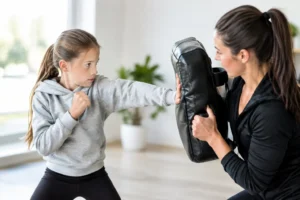
If a child is still full of energy after school, reacts with frustration easily, or believes they can do more than they used to, Kung Fu for Kids Berlin can make a real difference. Not through empty promises, and not by training children to be miniature adults. But through a structured environment where physical activity, concentration, and mutual respect shape every training day.
Children need spaces where they can move energetically while also learning to take responsibility for their actions. Martial arts offer exactly this combination. A properly executed stance requires focus. A partner drill requires consideration. And anyone who tries again after a failed attempt is training more than just a technique: he or she is developing character.
Why Kung Fu Is More Than Just a Sport for Children in Berlin
Kung Fu isn’t just a recreational activity where kids simply let off steam for an hour. Good children’s classes combine the joy of movement with clear rules, age-appropriate exercises, and continuous development. Children learn to listen to instructions, better assess their physical abilities, and treat others fairly.
The goal is not to fight as hard as possible as early as possible. Especially in children’s training, control is the top priority. Punching and kicking techniques are taught properly, partner drills are clearly guided, and physical differences are taken into account. Safety doesn’t come from fear of movement, but from good supervision, clear rules, and respectful interaction.
Parents often notice changes that occur outside of practice: Their child carries themselves with more confidence in everyday life, can concentrate for longer periods, or fits into a group more easily. Such developments take time. Not every child will immediately become self-assured, and not every child loves competition. What matters most is that they find a place where their own effort counts.
What Kids Really Learn in Kung Fu Class
Kung Fu combines physical training with inner attitude. During training, students build a foundation in areas such as stable stances, coordination, flexibility, and reaction time. This foundation leads to techniques that are practiced in a controlled manner and appropriate for the student’s age. Forms and set sequences of movements train memory, rhythm, and precision. Partner exercises make it clear that strength without control is not true strength.
Equally important are the social rules of the training group. Greetings, paying attention, fairness, and consideration are not trivial matters. They are what make focused training possible in the first place. Children learn that it’s okay to ask questions, that mistakes are part of the learning process, and that progress comes through repetition.
This connection is particularly valuable because the school day often involves a lot of sitting, pressure to perform, and fast-paced stimuli. In practice, it’s the moment that counts: a steady stance, calm breathing, and the next exercise. This can help children channel their energy more effectively without dampening their liveliness.
Self-defense starts with awareness
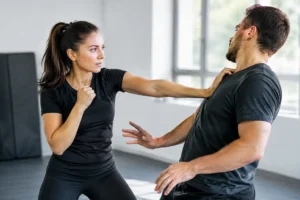
Practical self-defense for children does not mean resolving conflicts through physical violence. On the contrary: Children first learn to better recognize dangerous situations, set clear boundaries, and seek help. A loud, clear voice, keeping their distance, and finding a safe way to reach trusted adults are often more effective than any technique.
Physical self-defense techniques and protective movements can be part of training if they are taught properly, in moderation, and without instilling fear. The goal remains clear: Children should not feel helpless, but neither should they believe they have to resolve every conflict on their own. Self-defense is about acting wisely.
What kind of child is kung fu suitable for?
The short answer is: for many. Quiet children benefit from making themselves visible and developing confidence in their movements. Very active children learn to channel their energy and respond to cues. Children who have a hard time fitting in with groups can gradually find their place through group exercises.
However, it depends on the environment. A child doesn’t have to be particularly athletic to get started. They don’t need any prior experience, perfect coordination, or exceptional stamina. What they do need is a willingness to participate and learn the rules. A good class meets beginners where they are while also offering enough challenges for children with experience.
Age also plays a role. Younger children learn primarily through movement, pictures, and short activities. As they get older, technical details, taking on responsibility during partner drills, and athletic goals can take center stage. Therefore, group assignments should not only be practical but also correspond to the children’s developmental stage.
How Parents Can Tell If a Children’s Training Program Is Good
There’s a lot to observe during a trial practice session. Do the coaches address the children by name? Do the coaches explain the exercises in a way that the children can understand? Are there clear procedures, but also room for questions? And do they make sure that stronger or taller children don’t overwhelm their partners?
Professional training for children is neither chaotic nor military-style. It is structured without belittling the children. It challenges them without embarrassing them. Discipline here does not mean blind obedience, but rather reliability: listening, practicing mindfully, respecting training partners, and sticking with it.
The team’s broad range of expertise is also an advantage. When martial arts expertise, pedagogical understanding, and knowledge of physical development come together, exercises can be better tailored. This is especially crucial when working with children. A method that motivates a 10-year-old may be too complex for a 6-year-old.
At Berlin Siu Lam Wing Chun Pai & SLWCP Fight Academy, traditional Chinese martial arts meet modern training methods. Children are not limited to a single style, but are given a foundation that combines movement, technique, respect, and practical self-defense.
How to Get Started with Kids’ Kung Fu
Parents don’t need to buy a lot of equipment before the first practice. Comfortable sportswear, something to drink, and a willingness to try new things are usually enough. What’s more important is the right attitude: The first practice is meant to be a chance to get to know each other. Some children approach the group with openness right away, while others need several sessions before they feel comfortable.
Parents can help their children get started by asking more than just about their successes. Questions like “What did you enjoy today?”, “Which exercise was difficult?”, or “Who did you train with?” often lead to better conversations than asking whether the child did particularly well. Martial arts is a journey marked by many small steps forward.
Consistency makes a noticeable difference here. Those who train only sporadically take longer to internalize movements, rules, and group dynamics. At the same time, training should fit into everyday family life. A class that causes constant stress rarely becomes a good habit. Finding the right time and having realistic expectations are more helpful than excessive ambition.
Frequently Asked Questions About Kung Fu for Kids in Berlin
Is kung fu too combative for children?
No, not if it’s taught responsibly. Children learn controlled movements, respect, and conflict resolution. Uncontrolled roughness, intimidation, or pressure to perform have no place in a good children’s class.
What if my child is shy?
In that case, structured training can be particularly helpful. Shy children don’t have to be the center of attention right away. They can build confidence through set routines, individual exercises, and gentle partner work. Patience is more important than pressure.
How quickly can you see progress?
It depends on the child, the frequency of practice, and the starting point. Some improvements in coordination become apparent quickly, while others take weeks to show up in behavior or in how the child handles frustration. The most valuable progress is often the kind that children notice themselves: “I couldn’t do that a few weeks ago.”
A good training environment doesn’t just give children another activity to add to their weekly schedule. It teaches them that courage can be cultivated, that respect demonstrates strength, and that true confidence can grow from small, focused steps. Get your child involved—with time, good guidance, and a community that takes their journey seriously.