You don’t just want any old fitness program—you want a workout that challenges you and helps you grow? A martial arts trial session in Berlin will give you a taste of a real training session and show you whether this combination of technique, fitness, discipline, and community is right for you. It’s not your starting fitness level that matters—it’s your willingness to learn attentively and give it your all.
Martial arts are more than just punches, kicks, or a grueling session with a punching bag. You’ll learn to use your body in a controlled way, stay calm under pressure, and train respectfully with others. Especially in a city like Berlin, where there’s such a wide and varied selection of options, a trial session helps you not only to check out the style, the coaching staff, and the atmosphere, but also to experience them for yourself.
What to Expect During a Martial Arts Trial Class in Berlin
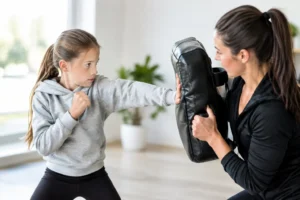
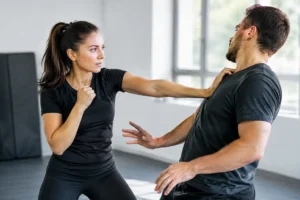
A good trial class isn’t just a demonstration where you sit back and watch. You’ll get moving, learn the basics, and get a feel for how the class is structured. Depending on the course, this might include footwork, posture, simple punching and kicking techniques, partner drills, pad work, or the basics of self-defense.
The rule is: Beginners don’t have to prove anything. A professionally led workout starts right where you are. If you haven’t done much sports training yet, you need clear explanations, a suitable pace, and safe exercises. Those who already have experience in boxing, karate, kung fu, kickboxing, wrestling, or MMA tend to focus more on technical details, training intensity, and the opportunity for long-term development.
You’ll quickly notice whether instructors pay attention to proper form, whether partner drills are performed in a controlled manner, and whether questions are welcome. In martial arts, safety doesn’t mean that training has to be easy. It means managing the intensity sensibly, respecting limits, and teaching techniques in a way that allows for continued development.
First, set your goal; then, find the right training plan
Not everyone starts for the same reason. Some want to clear their heads after work and get physically stronger. Others are looking for effective self-defense, want to regain their self-confidence, or are looking to get back into sports after years of inactivity. Teenagers often benefit from clear structures, focus, and respectful interaction. For children, the focus is on movement, coordination, the joy of learning, and age-appropriate rules.
That’s why it’s worth taking an honest look at your own goals before your first training session. Do you want to learn traditional martial arts with forms, principles, and cultural depth? Are you drawn to the direct exchange in boxing or kickboxing? Do you want to learn to understand distance and ground fighting through grappling? Or are you looking for a well-rounded training program that combines striking techniques, clinching, wrestling, and self-defense?
There is no universally “best” system. What matters is whether the training method suits you and whether you can practice it regularly. Traditional Wing Chun and Shaolin Kung Fu can provide a strong foundation for body structure, timing, coordination, and concentration. Modern martial arts such as boxing, kickboxing, grappling, or MMA bring different areas of focus: working at a distance, endurance, competitive experience, pressure, and realistic movement patterns. Training is particularly valuable where tradition meets modern demands without making empty promises.
Self-defense requires practice, not just techniques
Many people sign up for a trial class because they want to feel safer. That’s an understandable goal. But self-defense isn’t just a collection of tricks that automatically work after an hour. It starts with awareness, clear communication, a sense of personal space, and the ability to recognize and avoid danger as early as possible.
If physical self-defense becomes necessary, what counts are simple movements that can be practiced under stress, a stable stance, and the determination to extricate oneself from a situation. Responsible training therefore teaches not only techniques, but also de-escalation, self-control, and the legal and ethical framework. The purpose is not to seek a fight. The purpose is to remain capable of acting.
Here’s how to prepare effectively for your first session
You don’t need any martial arts experience for a trial class, and you usually don’t need any special equipment either. Clean workout clothes, something to drink, and a small towel are usually all you need. Don’t work out on a full stomach, and arrive a few minutes early so you can settle in without rushing.
Before we start, let us know if you have any injuries, pain, or have taken a long break from training. This isn’t a sign of weakness—it’s important information for tailoring your workout. A good team can adapt exercises and let you know when it makes sense to take a break. Especially with shoulder, knee, or back problems, it’s important to build up the workload wisely rather than pushing too hard.
Your mindset also makes a difference. You don’t have to know right away which martial art will be your path. Approach each class with an open mind, try out different movements, and be receptive to corrections. Progress doesn’t come from a single spectacular strike, but from repeated, focused practice. Your effort counts, even if the technique still looks unfamiliar at first.
How to Tell if a Martial Arts School Is Good
The atmosphere in the room often speaks louder than any advertising slogan. Are newcomers welcomed and guided? Do advanced trainees focus on their workouts without belittling beginners? Is the interaction during partner training controlled and respectful? A strong training community is performance-oriented, but not ruthless.
Also, pay attention to whether the concepts are explained in a way that’s easy to understand. “Just do it” isn’t enough if you want to learn why a certain posture works, how to transfer power, or why distance and timing are crucial. Good coaches provide specific corrections, encourage personal responsibility, and still leave room for questions.
Another point is the range of offerings. When you train over the long term, you change. Maybe you’ll start with fitness and self-defense, and later become interested in sparring, competition, or a traditional style. A school with diverse, well-structured programs can guide you along this path without requiring you to start from scratch every time you set a new goal.
At Berlin Siu Lam Wing Chun Pai & SLWCP Fight Academy, this approach is at the heart of what we do: we combine traditional Chinese martial arts with boxing, kickboxing, grappling, MMA, and practical self-defense. The focus remains clear: techniques should be effective, training should be challenging, and every student should receive the guidance necessary for their own progress.
Children, teens, and adults exercise differently
A trial session should be appropriate for the children’s age and developmental level. Children need an environment that combines clear rules, physical activity, and playful learning. They practice coordination, focus, and treating one another with respect. There is no place for harshness or pressure to perform, but there is room for commitment and the joy of tackling a task.
Teens benefit from training that takes them seriously. Martial arts can help them channel their energy in a constructive way, recognize their limits, and cope better with frustration. At the same time, the group provides a social setting where respect is not only expected but also put into practice.
For adults, workouts can be significantly more challenging, but they must still be tailored to each individual’s capacity. Someone who works out after a day at work may need a different warm-up than someone with competitive goals. Good classes strike this balance through clear structure, appropriate intensity, and a culture where focus is more important than ego.
Ask the Right Questions After the Trial Workout
Right after your first session is a good time to tune in to how your body feels. Was it challenging, but not overwhelming? Were you able to follow the instructions? Did you feel comfortable interacting with your workout partners? And most importantly: Would you like to come back next week?
Feel free to ask about the course structure, options for beginners (children, teens, and adults), and how the training content changes as you gain experience. If self-defense is particularly important to you, this should be discussed just as openly as competition goals or physical limitations. Honest advice is more helpful than big promises.
A single workout can point you in the right direction, but it’s consistency that brings about change. Give yourself time to get familiar with the basic movements, learn the names, and get a feel for the group’s rhythm. Get involved, stay curious, and choose a place where you don’t just work out, but where you gradually become stronger, more mindful, and more confident.