Everyday life in Berlin demands a fast pace: crowded subways, long workdays, constant stimuli. That’s why people searching for “Chi Kung for Beginners in Berlin” are often looking for more than just gentle movement. It’s about finding a consistent space where breathing, posture, and mindfulness come together again—and where calm gives rise to resilient strength.
Chi Kung is neither a passive relaxation program nor a collection of mysterious rituals. When properly guided, it is focused physical training. You’ll learn to align yourself properly, consciously regulate tension, and perform movements in a controlled manner. This can be particularly valuable for people who sit a lot, are under pressure, or are looking for a solid introduction to Chinese martial arts.
What Chi Kung Really Means for Beginners
Chi Kung, also spelled Qigong, combines slow movements, breathing techniques, posture, and mental presence. The focus is not on mastering complicated forms as quickly as possible. What matters most is becoming more aware of your own body and working accurately, step by step.
For beginners, this often starts with a stable basic posture. The feet are in contact with the floor, the knees remain relaxed, and the spine is straight. This is accompanied by calm, natural breathing. These basics seem simple, but they require real attention. Those who practice them regularly often notice quickly that their movements become clearer, their shoulders feel less tense, and their concentration becomes more reliable.
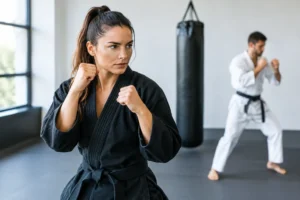
In the context of martial arts, Chi Kung takes on an added depth. Good posture, balance, breathing, and the ability to release unnecessary tension are not only important when standing still; they also support striking techniques, movement, reaction, and controlled use of the body. Tradition meets modernity here: The principles of Chi Kung complement athletic and practical combat training, but do not replace it.
Chi Kung for Beginners in Berlin: Who Should Try It?
You don’t need to be particularly flexible or experienced to get started. Chi Kung is suitable for adults looking for a peaceful respite from their daily work routine, as well as for people who want to build their fitness in a more targeted way. Even those who already practice boxing, kickboxing, Wing Chun, grappling, or strength training can benefit from improved body awareness and breath control.
However, the benefits depend on your goal. If your main goal is to sweat profusely and push your endurance to the limit, an intense martial arts or conditioning workout is the more direct choice. If you want to learn how to stand up straight, control your movements with greater precision, and stay calm under pressure, Chi Kung is a great complement.
Beginners, in particular, benefit from a class where no one pretends you’re supposed to know everything already. Progress comes from repetition, correction, and patience. A clean stance is worth more than a big movement with poor alignment. Your effort counts—but it needs a method.
Getting Started: Start Slowly, Train Consistently
The first training session doesn’t have to be spectacular. It should be easy to understand, safe, and clearly guided. At the beginning, the goal is to get to know your own starting point: Where am I holding unnecessary tension? How do I breathe when I’m concentrating? Can I stand steadily for a few minutes without slouching my shoulders?
Typical exercises for beginners include simple standing poses, slow arm movements, weight shifts, and coordinated breathing patterns. You should not force yourself to breathe “deeply.” Forced breathing can cause dizziness and detract from the quality of the practice. Breathing should flow naturally while the body remains alert and aligned.
A good class allows for individual differences. If you’re starting after a long break from exercise, you’ll begin differently than someone who already works out regularly. If you’re experiencing acute pain, severe circulatory problems, or are recovering from an injury, you should consult a doctor before exercising and inform the instructors. Taking responsibility for your own body is part of disciplined training.
Why Written Instructions Are More Important Than a Video
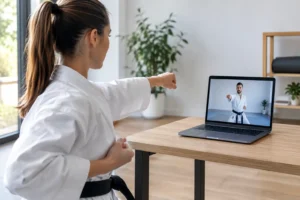
Online videos can inspire and serve as reminders, but they can’t tell if your knee is caving in, if you’re tensing your neck, or if your breathing is becoming ragged. Especially in the beginning, small corrections make a big difference. They help you avoid reinforcing bad habits over the course of weeks.
In-person training also offers something that’s often missing when working out alone at home: a sense of commitment. You show up, switch gears, and train with people who are also working on themselves. This sense of community isn’t just a side effect. It gets you through days when motivation is low, and it creates an environment where respect and focused practice become second nature.
At Berlin Siu Lam Wing Chun Pai & SLWCP Fight Academy, this connection is at the heart of everything we do: traditional Chinese training principles meet professionally guided martial arts, combat sports, and self-defense. Chi Kung is not treated as a standalone wellness program, but rather as part of a holistic training program. The focus is on the individual—their fitness level, their goals, and their willingness to learn on a regular basis.
What You Should Bring to Your First Workout
You don’t need any special equipment. Comfortable clothing that allows you to move freely is all you need. Whether to wear clean indoor shoes or train barefoot depends on the specific class. An open, attentive attitude is more important than the perfect workout pants.
Ideally, arrive a few minutes early so you can get there without rushing. Don’t eat a heavy meal right before your session, and bring something to drink. If you’re unsure whether you’re in good enough shape, just let us know. A professional workout can be adjusted without either going easy on you or pushing you too hard.
Don’t expect to feel everything after just one session or to be completely relaxed right away. Some people first become aware of just how much tension they usually carry. This isn’t a step backward, but rather a closer look at their own state. With regular practice, the ability to respond to this awareness grows.
From a Calm State to a Proactive Mindset
The effects of Chi Kung are often felt outside the practice room. You sit up straighter at your desk, react less impulsively in stressful moments, or realize sooner when you need a break. These effects aren’t guaranteed to happen immediately. They occur when you attend classes consistently and not only understand the principles but also practice them physically.
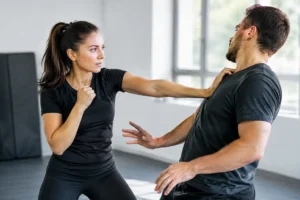
This is particularly valuable for those interested in martial arts. Technique requires structure. Self-defense requires clear decision-making. And every effective movement begins with a body that isn’t working against itself. Chi Kung trains this foundation: staying calm, maintaining balance, and applying force in a targeted manner.
The Right Next Step
A trial class is the best way to find out if the atmosphere, the instruction, and the training style are a good fit for you. Don’t just focus on whether you enjoy the exercises. Pay attention to whether corrections are given respectfully, whether questions are welcome, and whether you feel challenged without being pressured.
You don’t have to become more flexible, relaxed, or athletic before you start. Just start right where you are. A calm, controlled exercise can be the first step toward greater stability—in your workouts and then right where everyday life in Berlin challenges you.