Wing Chun doesn’t start with spectacular kicks or the desire to be able to fight as quickly as possible. It begins with adjusting your stance, distance, and focus. This guide to Wing Chun shows you what lies behind the system, what effective training looks like, and what matters if you want to do more than just copy movements—if you want to develop real skills.
Wing Chun is a Chinese martial art known for its direct movements, stable structure, and intelligent use of close-quarters combat. However, training is about more than just techniques: You’ll learn to stay calm under pressure, use your body in a controlled manner, and take responsibility for yourself and your training partners. Tradition meets modern training realities.
What Wing Chun Is All About
Wing Chun is based on a clear principle: The shortest practical path to the goal is often the best. Instead of taking a wide swing, you learn to protect your center, anticipate attacks early, and move forward in a controlled manner. At first glance, the movements often appear simple. However, their effectiveness stems from timing, structure, a sense of distance, and consistent repetition.
A key principle is what’s known as the “center line.” It refers to the area you want to protect on your own side and control on your opponent’s side. Hands and footwork are not considered separately. When your stance is stable, your guard is in place, and you can read the distance, attack and defense often arise from the same movement.
That doesn’t mean Wing Chun consists of rigid formulas. A technique that works against a light, straight attack may require a different solution when facing a powerful punch, a kick, or a grab. Good training therefore teaches principles rather than false guarantees. You don’t learn that a movement always works, but rather when it makes sense to use it, what its limitations are, and how you can adapt.
A Guide to Wing Chun: The Most Important Training Elements
A solid foundation takes time. Those who train consistently not only develop a broader repertoire but also a better sense of their own bodies and of dynamic situations. These building blocks are all interconnected.
Posture, Stance, and Movement
It all starts with your stance. Your feet give you stability, but they shouldn’t keep you glued to the ground. You need a position from which you can absorb pressure, evade, move forward, and change direction. Your knees, hips, spine, and shoulders work together. Tension is necessary; stiffness slows you down.
Movement in Wing Chun is purposeful. You don’t just move forward or backward; you adjust your distance, angle, and balance. Beginners, in particular, often want to strike faster right away. It makes more sense to start by standing with proper form and moving in a controlled manner. Speed comes from precision—not from rushing.
Basic Techniques and Structure
Straight strikes, open-hand techniques, defensive stances, and elbow strikes form an important foundation. What matters isn’t how many variations you know. What matters is whether your technique remains coordinated while you’re moving: your feet, hips, back, and hands must work as a single unit.
That’s why coaches often correct small details. A raised chin, an elbow that’s too far out, or a shoulder that drops forward can weaken your stance. These corrections aren’t an end in themselves. They help you transfer power more efficiently while keeping yourself better protected.
Chi Sao: Learning to Understand Contact
Chi Sao, often referred to as “sticky hands,” is a well-known training method in Wing Chun. Two partners maintain contact through their arms and practice sensing pressure, openings, and changes. The goal is not to win a predetermined sequence. You develop reaction time, sensitivity, and the ability to maintain your bearings when in contact.
Chi Sao is valuable, but it is no substitute for free practice. If you train only in close contact, you may become accustomed to certain patterns. That’s why it should be supplemented with distance work, pad work, partner drills, and—depending on your training goals—more open sparring. Only when the pace changes will it become clear how well you can truly apply your principles.
Forms, Partner Training, and Repetition
Traditional forms teach body mechanics, coordination, and concentration. They provide an opportunity to consciously examine movements without external pressure. But a form alone does not make anyone capable of taking action. Skills develop when you practice techniques with a partner, receive feedback, and repeat them regularly.
Good partner training requires respect. You work in a controlled manner, adjust the intensity and pace, and protect your partner’s health. That’s exactly how trust is built. When you feel safe during training, you can focus better on learning and gradually allow for more intensity.
Self-Defense: Think Clearly, Don’t Just React
Wing Chun can provide a strong foundation for self-defense if trained realistically. However, self-defense begins long before a physical confrontation. Awareness, maintaining distance, clear communication, and the ability to remove oneself from a situation in time are often more effective than any technique.
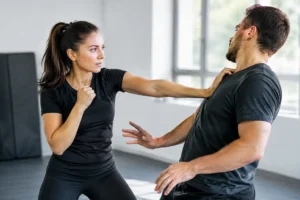
If a threat does arise, simple, sound decisions are what matter. You need to maintain a stable stance, protect your head and core, create distance, or move decisively through an opening. There is no one-size-fits-all solution for every situation. Size, strength, the element of surprise, multiple attackers, confined spaces, or the presence of an object can fundamentally alter the situation.
That is why responsible training also involves recognizing that self-defense is not a competition or a stage for the ego. The best outcome is to return home unharmed. Physical techniques are an important part of that, but they are never the whole plan.
Why Traditional Supplements Are Both Useful and Modern
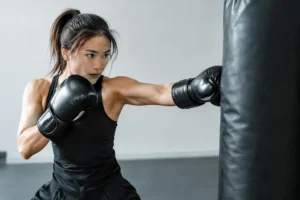
Modern Wing Chun offers a precise system for close-range combat, structure, and direct lines. At the same time, in a real-life confrontation or a competitive match, you’ll encounter a variety of attacks and distances. In boxing, for example, traditional Wing Chun can help train rhythm, guard, and head movement. In kickboxing, traditional Wing Chun can broaden your understanding of kicks and striking ranges. Grappling itself demonstrates what happens when contact leads to a clinch or to the ground. Traditional Wing Chun aims to avoid the ground and offers ways to break free or quickly get back to your feet. In an emergency, this can save your life—especially when facing multiple attackers.
That doesn’t mean you have to master everything perfectly at once. It means taking an honest look at your training. Anyone who takes self-defense, fitness, or competition seriously benefits from training that doesn’t romanticize gaps in their knowledge. At Berlin Siu Lam Wing Chun Pai & SLWCP Fight Academy, this combination of Chinese martial arts, combat sports, and practical self-defense is consciously put into practice.
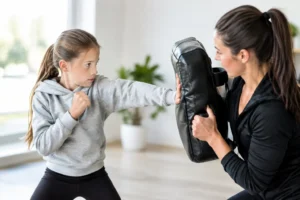
Which supplement is right for you depends on your goal. If you want to focus on traditional techniques, your priorities may differ from those of someone who wants to spar or compete. For children and teens, safe movement patterns, coordination, respect, and age-appropriate development are also particularly important.
Here’s How to Get Off to a Good Start with Your Workout
You don’t need to be particularly flexible or already athletic to start practicing Wing Chun. What you need is a willingness to train regularly and to accept corrections. A trial class is a good opportunity to get a feel for the atmosphere: Are the instructions clear? Are beginners taken seriously? Do the more advanced students practice with control?
For the first few months, it’s best to keep things simple. Come regularly, work on your form and basic movements, ask questions, and accept that progress isn’t always immediately visible. Some weeks you’ll feel more coordinated and faster. Other weeks, you’ll mainly notice what isn’t working yet. That’s exactly where learning begins.
Don’t train against your body’s limits either. Sore muscles are normal, but joint pain or a persistent stinging sensation are signs that you should slow down and consult with a professional. Good martial arts challenge you without recklessly wearing you down. Recovery, sleep, and a sensible training routine are all part of it.
Progress is reflected in behavior
The value of Wing Chun isn’t just about whether a technique looks clean during drills. You’ll notice progress in the way you stand more upright, perceive distance more consciously, and remain calmer under pressure. Perhaps you’ll set boundaries more clearly. Perhaps you’ll handle a challenge more calmly because you’ve learned not to immediately dodge or overreact.
Get involved, but be patient with the process. Wing Chun rewards consistent practice: with better body control, more resilient self-confidence, and a community where respect and growth matter more than putting on a show.