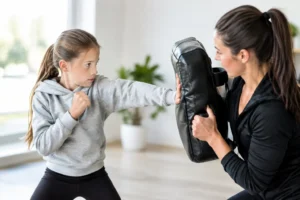
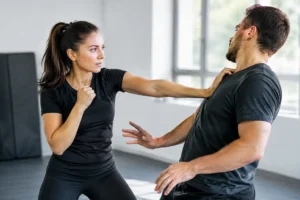
A child comes home after their first trial class, sweaty and proud, and tells you about a new technique. That’s exactly when the crucial question arises for parents: Was the class not only exciting but also well-led? This parent’s guide to safe martial arts instruction will help you focus on the criteria that really matter. After all, safety in martial arts doesn’t mean that children never fall, grapple, or exert themselves. It means that they have these experiences in an age-appropriate, controlled, and respectful manner.
Martial arts can offer children many benefits: improved body awareness, concentration, courage, self-control, and the ability to set clear boundaries. However, this development requires an environment in which performance is not prioritized over health, a sense of belonging, and responsible learning. Tradition meets modernity when values such as respect and discipline are combined with pedagogical expertise, effective training methods, and clear safety rules.
Safe martial arts instruction starts with the right attitude
A good school does not view children as little adults, nor does it view them merely as talents for competition. Children learn through movement, repetition, and positive experiences. They need clear rules, but they also need coaches who can explain things, listen, and respond appropriately when a child is unsure, seems overwhelmed, or doesn’t understand an exercise.
During the trial class, pay attention to the tone of the instruction. Are the children addressed by name? Do the instructors explain why a rule applies? Are mistakes corrected calmly, rather than embarrassing a child in front of the group? Discipline is valuable in martial arts. However, it should never be confused with fear, loud belittling, or blind obedience.
Respect is also evident among the children. Partner exercises only work if both sides are mindful of each other. A child must learn to punch, kick, or wrestle in a controlled manner—and just as clearly to say “stop” when things get too much. This skill is far more than just a training rule; it strengthens self-protection skills in everyday life.
Age-appropriate groups instead of cookie-cutter training
Whether a child starts training at age five, eight, twelve, or fifteen makes a big difference. Younger children need a wide variety of movements, simple technical exercises, and playful activities to develop coordination and attention. For adolescents, technique, fitness, partner drills, and responsible physical contact can become significantly more complex. Nevertheless, development remains individual: a quiet 10-year-old may need different types of stimulation than a very athletic peer of the same age.
It makes sense to divide students into groups based not only on their year of birth, but also on their size, maturity, and experience. Significant physical differences should be taken into account, especially during exercises that involve physical contact. Putting only the strongest students together promotes neither safety nor effective learning. Frequent partner changes help children develop consideration and adaptability.
Group size also plays a role. Not every class has to consist of a very small group. The key factor is whether the teacher can maintain an overview, provide corrections, and offer support when children with different skill levels are grouped together. Feel free to ask about the teacher-to-student ratio and how new children are integrated into existing groups.
Contact is not automatically dangerous
Many parents are initially skeptical when it comes to punching, kicking, or ground fighting. That’s understandable. However, contact training is not the same as uncontrolled fighting. When done correctly, it teaches a sense of distance, body tension, responsiveness, and how to use strength responsibly.
Training usually begins with technique, movement, and controlled partner drills. Later, once the fundamentals are mastered, sparring or freer practice can be beneficial. This requires rules, protective gear, appropriate intensity, and an instructor who can intervene at any time. Head contact, hard hits, or pressure to perform have no place in children’s training. For teenagers, the intensity also depends on their experience, physical development, and personal goals.
A reputable training program also teaches children that martial arts are not meant to be used to settle conflicts in the schoolyard. Self-defense begins with being alert, using clear communication, maintaining a safe distance, and knowing when walking away is the best decision.
How to Recognize Quality Care
A safe training session isn’t guaranteed by fancy mats or particularly loud instructions. The team’s expertise is crucial. Expertise in a martial art or combat sport is important, but working with groups of children also requires an understanding of pedagogy. Coaches must be able to assess the level of exertion, adapt exercises, and lead a group without losing sight of individual children.
When forming your impression, pay attention to four specific points:
- The teacher explains the exercises clearly, demonstrates them, and checks to see if the children can perform them confidently.
- The warm-up, technical exercises, and calm cool-down follow a clear structure, rather than immediately sending the children off to engage in wild sparring matches.
- Injuries, pain, and specific health conditions are taken seriously and not dismissed as a lack of toughness.
- Parents are provided with clear points of contact and answers to questions about rules, equipment, training goals, and organizational procedures.
Teams that combine martial arts expertise with knowledge of physical therapy or education are particularly valuable. Not every school needs to have all these specialties under one roof. However, it should know where its responsibility begins and when a child needs medical or other professional support.
Rules That Truly Protect Children
Good rules are short, easy to understand, and consistently followed. This includes keeping training areas clean, maintaining protective gear in good condition, and being mindful of jewelry, long hair, or inappropriate clothing. Rituals are just as important: greeting one another, paying attention during instructions, switching partners respectfully, and clearly ending the exercise when a stop signal is given.
Also ask how conflicts are handled. In every group of children, there is friction, frustration, and sometimes tears. What matters isn’t whether these things happen, but whether the coaches handle the situation calmly. A child should be allowed to learn that losing, slipping up, or not yet being able to perform a technique are all part of the journey. At the same time, no one should be forced to compete despite fear or pain.
Safety also includes protecting children’s privacy. Clear, professional boundaries are needed when it comes to photos, changing rooms, and interactions between adults and children. Parents should know what rules apply and who to turn to if they have any concerns. Transparency builds trust—and trust is the foundation that enables children to speak up when something isn’t right.
The Role of Parents: Showing Interest Without Constant Pressure
Parents don’t need to stand next to the mat and evaluate every move. It’s more helpful to show genuine interest after practice: What did you enjoy today? Was anything difficult? Who did you practice with? Questions like these show the child that their experience matters, without turning practice into a performance test.
At the same time, it’s worth checking in regularly. Is your child’s enjoyment of training changing? If your child seems constantly anxious or exhausted, or repeatedly complains of pain, this needs to be addressed. A one-time case of muscle soreness after unfamiliar exercise is different from recurring discomfort or the pressure to participate despite an injury.
Expectations, too, deserve honesty. Martial arts don’t make children invincible, constantly focused, or free from conflict overnight. But step by step, they can help children move with better posture, gauge their strength more accurately, and treat others with greater respect. Progress is evident not only in a technique executed with precision, but also in a child’s ability to get back up after a loss and keep learning.
The Trial Workout as a True Test
A trial class isn’t just a showcase—it’s an opportunity to get to know the atmosphere and how things work. Don’t just focus on whether your child is immediately enthusiastic. Some children need two or three sessions before they open up in a new group. Instead, observe whether the school provides a safe environment and whether your child feels seen.
At Berlin Siu Lam Wing Chun Pai & SLWCP Fight Academy, the focus is on the individual: children and teens are encouraged to challenge themselves, develop technical skills, and become part of a respectful training community. This requires dedicated training, but also clear boundaries and professional guidance.
Give your child time to find their place on the mat. When respect, age-appropriate guidance, and the joy of learning come together, that first training session becomes more than just a hobby—it becomes a space where your child can grow.